Eszter Somogyi
Since 1993, I have devoted my life to the classical Indian dance form Bharatanatyam. As a long-standing member of the Shivashakti Kalananda Dance Theatre (Artistic Director: Panni Somi) in Budapest, I have been performing regularly on stage since 2000 and have been involved in the planning and organisation of a wide range of cultural programmes.
I have been living and teaching in Berlin since 2019. My aim is to convey the aesthetic depth, rhythmic precision and narrative power of Bharatanatyam, both on stage and in the classroom.
Dance training & further studies
- Start of dance training: 1993
- Solo debut (Arangetram): 2001
- Dance teachers: Panni Somi, Shanty Rayapoullé, T. Saravanan, C. Mariappane, Shyamala Surendran
- Intensive study visits to Pondicherry, India: 2003–2004, 2005, 2006, 2008
- Additional dance styles studied: Odissi (with Vera-Viktoria Szirmay), Mohiniyattam (with Shyamala Surendran) and Kathak (with Rajendra Gangani and Swati Sinha)
Academic Background & Research
Alongside my dance training, I completed a Master’s degree in Hungarian Language and Literature (MA 2003) and another in Indology (MA 2005) at Eötvös Loránd University (ELTE) in Budapest.
As a visiting student at the University of Pondicherry on a scholarship from the ICCR (Indian Council for Cultural Relations), I furthered my knowledge of ancient Indian drama between 2003 and 2004. I have also been studying classical Tamil and philology in depth (including participation in the International Summer/Winter Schools for Classical Tamil from 2004 to 2025).
Alongside my artistic work, I work as an academic editor and assistant. In this role, I oversee the philological and digital processing of classical Tamil texts and text editions.
Media & Insights
For more videos, follow the links to my social media channels: YouTube, Facebook and Instagram
About Bharatanatyam
History and Renaissance
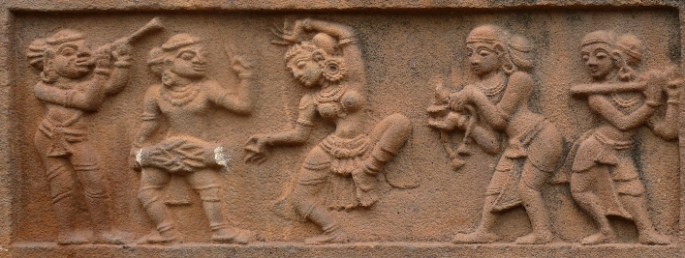
The roots of Bharatanatyam lie in the temple culture and royal courts of South India, as well as in classical Indian theatre.
Until the early 20th century, the dance was known as Sadirattam or Dasi Attam, and its technique, Bharatanatyam, was traditionally passed down by dance masters (Nattuvanars) and the community of Devadasis. As the social standing of the artists declined, the status of this dance also came to be looked down upon.
In the 1920s and 1930s, the dance was gradually rediscovered by people from higher social classes: it came to be recognised as part of the national identity during the Indian independence movement. People such as the lawyer E. Krishna Iyer, Esther Sherman (Ragini Devi) and politicians spoke out in favour of reviving this art form. Eventually, Sadirattam was reborn as Bharatanatyam: Rukmini Devi Arundale shaped Bharatanatyam in such a way that it could develop into a stage dance (rather than a temple or court dance). Together with her husband, she founded Kalakshetra, an academy that quickly became a centre for classical languages (Sanskrit and Tamil), Carnatic music and dance.
These days, Bharatanatyam is experiencing a renaissance: not only is the classical repertoire being preserved, but thousands of modern pieces that draw on its techniques have been created with contemporary themes.
Aesthetics and Forms of Expression
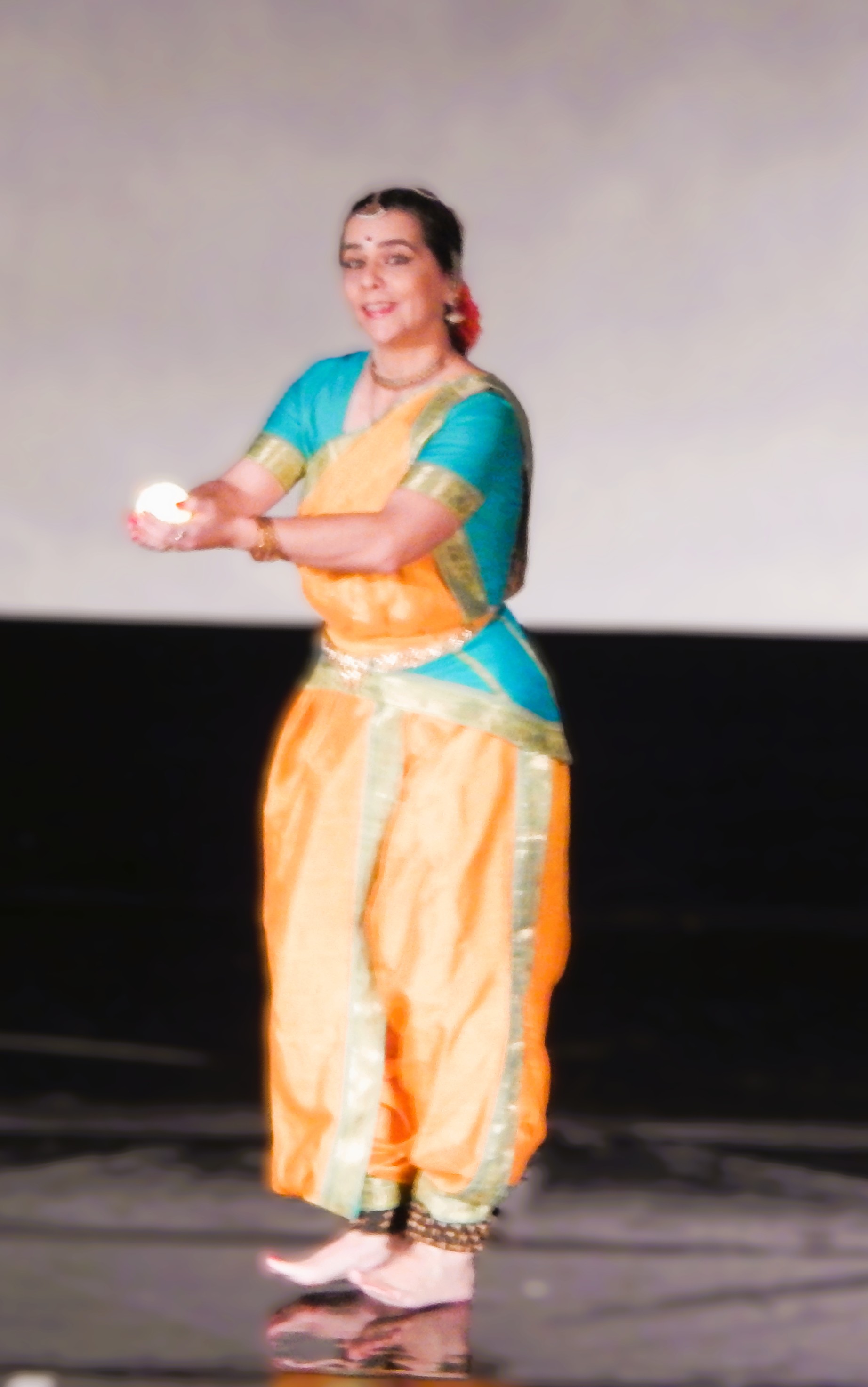
Bharatanatyam has two aspects: Nritta (pure dance) and Abhinaya (drama). Pure dance is abstract, dynamic and highly complex in terms of rhythm. The focus is on the geometric precision of the movements, posture, tempo and spatial lines. Nritta does not tell a story, but captivates the audience with a pure technical symbiosis of music, rhythm and movement.
Through abhinaya and nritya (expression and narration), the dancers bring stories to life. They do this through expressive postures, nuanced facial expressions and precise hand gestures (mudras). In most pieces, these two elements blend together, appealing equally to the audience’s senses and minds.
To read my educational articles and support my work as an artist, please visit me at Patreon and Substack.

